Search Results : New

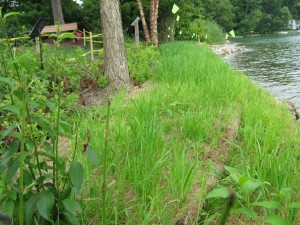
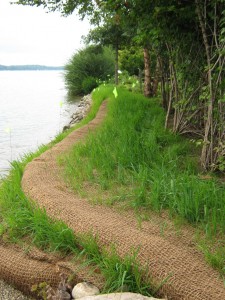
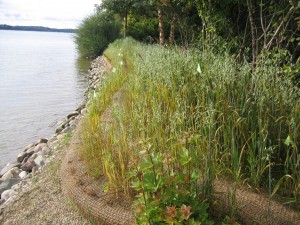
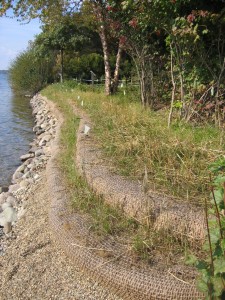
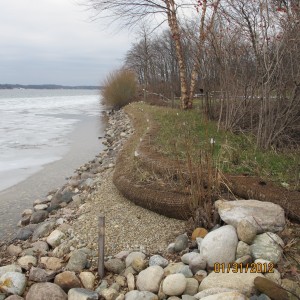
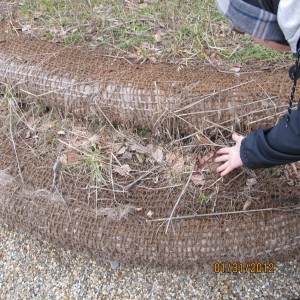
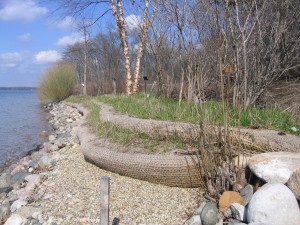
Growth on the New Lifts through the first season


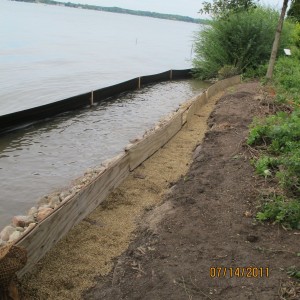
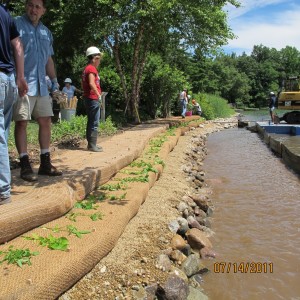
The completed encapsulated soil lift system, ready to go

After just 2 week the cover crop of annual grasses has sprouted

Early August of 2011 looking south. Deer have been browsing on the dogwoods.

View of the new growth looking north

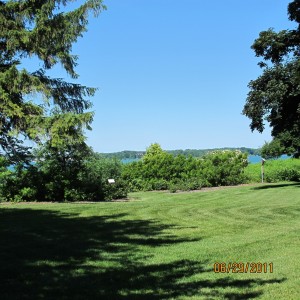
September 2011, Looking south, grasses flowering

September 2011, grasses flowering, viburnum growing back from stump, looking north


October 2011, seed heads of grasses trimmed off, looking north


January 2012, not much ice this year, looking north

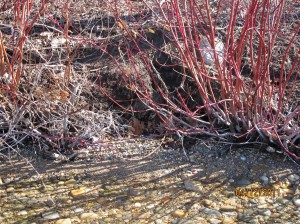
January 2012, dogwood shrubs are showing winter color

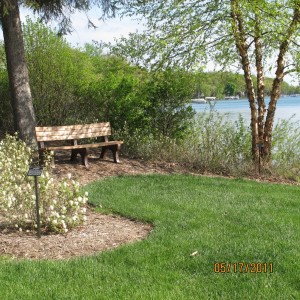
March 2012, unusual warm weather spurs growth

New Construction on Landscape Three in 2011


Continued erosion on the shoreline calls for a new solution

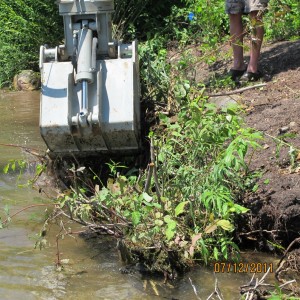
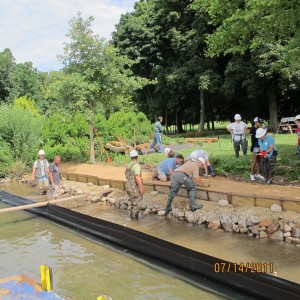
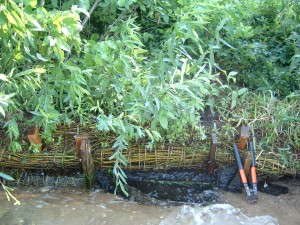
The first step is to take out the remnants of the old fascine on the shoreline

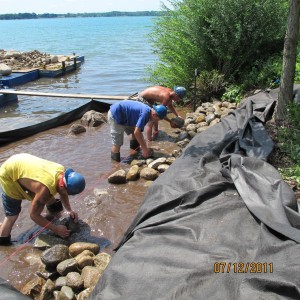
Now the big rocks are brought in to build the toe


Laying the rock base for the toe

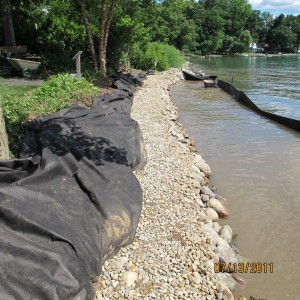
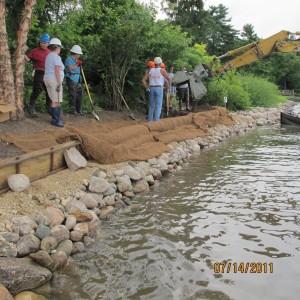
Gaps are filled with smaller stone (note the fabric holding the native soil in place)

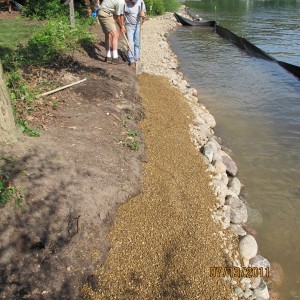
Pea stone is added on top of the small stone

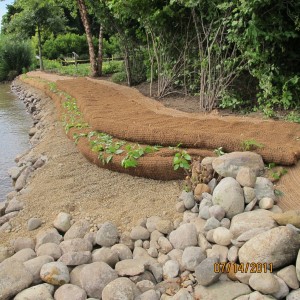
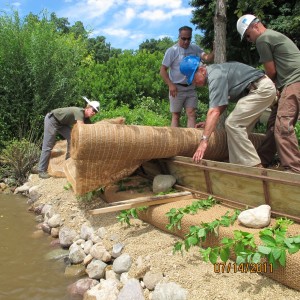
Forms are put in place and building the lower encapsulated soil lift may begin

Fabric has been laid down and the soil is brought in

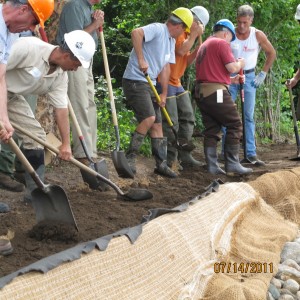
Leveling and tamping down the soil

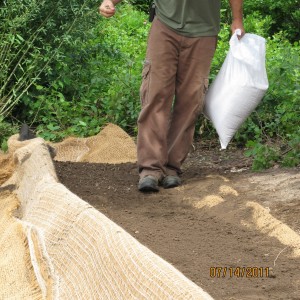
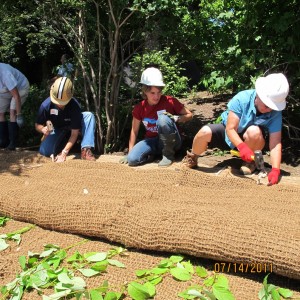
Seeding the lift before the fabric is secured

Staking down the fabric on the lower lift before starting the upper lift

Building the upper lift begins after setting dogwood shrubs to grow between the lifts

Staking down the fabric of the upper lift

Trimming off the tips of the dogwood shrubs and cleaning up the site

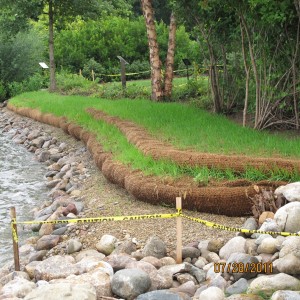
The completed encapsulated soil lift system, ready to grow plants

Landscape Three Photos over the Years

 
Lakeshore Landscape Site 3 in its first year

View from the lakeside of Landscape Three in its first year

Keeping the shrubs watered while they settle in

Late summer of the first year

Year 2, keeping the planting weed free

Shrubs growing well without extra water now

Shoreline colors, early fall of 2004

Shoreline colors in early fall

Looking North in 2005

Summer view, 2006

Summer 2007

Winter on the lakeshore

Spring is sprouting in 2008

The new look after storms took down the old willow tree

Summer 2008

Early fall color 2008

A bright summer day in 2009

Mid-summer 2010

Late Summer 2010

Fall colors in 2010

Spring of 2011, Fothergilla in bloom

Early summer in 2011

Landscape Three Fascine Repair History


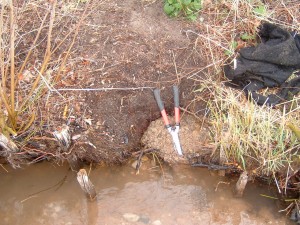
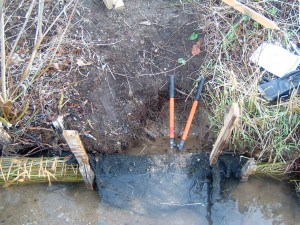
Eroded area of bank

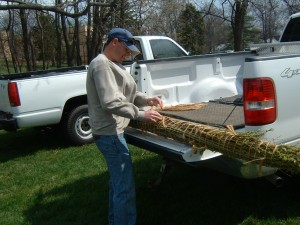
Making a replacement fascine bundle

New bundle in place, ready for soil to be added behind it

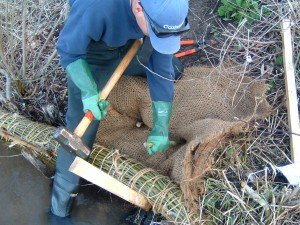
Fill added to repair and coir blanket staked in place to hold it

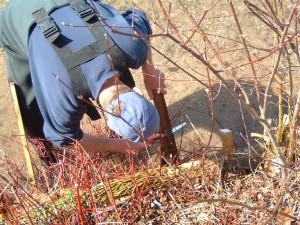
Excess staking cut back on repaired area

Fascine staked after dogwood whips added, excess staking being removed

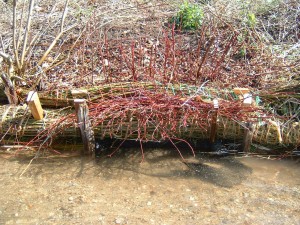
Completed fascine repair with live stakes ready to grow

First summer's growth after repair completed

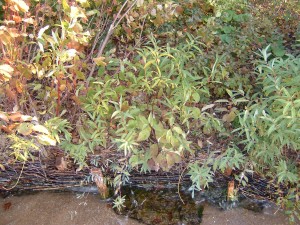
Fall color that same season

space


Property Owners


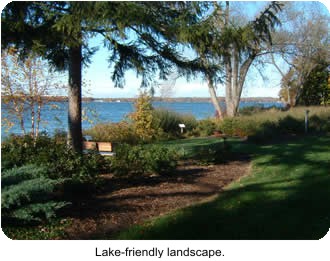
Lake-friendly landscape

Congratulations on being a Michigan lakefront property owner! Living “on the edge” offers a lifestyle that is framed by shoreline – that ecologically sensitive transition between land and water. Shoreline property owners interested in protecting or improving the health of their lake may have questions about managing their shoreline with respect to the lake’s littoral zone. Lakescaping, or alternative shoreline landscaping, strives to protect or restore shoreline areas to protect this zone that is so important to lake ecology.

Lakescaping involves the following principles:

Stormwater Retention

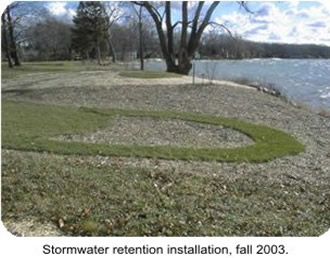
Trapping and infiltrating stormwater is a key component in protecting and improving lake water quality. Rainwater collecting on rooftops, walkways and parking lots tends to move overland to the lake, taking with it soil particles, lawn fertilizers and vehicle fluids. Development around lakes many times creates “pinch points” that collect and funnel stormwater into and through a property, causing soil erosion and washouts. KBS Lakescape One demonstrates a simple solution to overland flow of stormwater. Rain gardens are popular lakescape features that add beauty and retain stormwater. However, more technical solutions may be called for depending on the surface upon which stormwater is collected and the potential for pollutant delivery to groundwater.
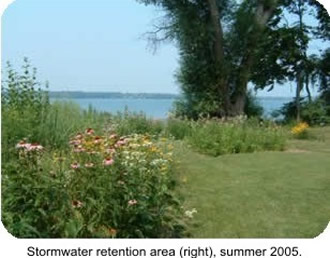
Photo Natural Shoreline Stormwater retention areaPhoto Natural Shoreline Stormwater retention installation


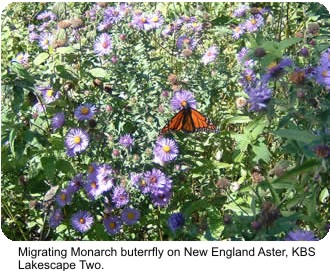
Habitat EnhancementMigrating Monarch butterfly on New England Aster

Wildlife viewing is one reason people enjoy living on lakes. Through publications like “Lakescaping for Wildlife and Water Quality” lakefront property owners are realizing that restoring native shoreline vegetation can enhance that experience.The Michigan Native Plant Producers Association and the Wildflower Association of Michigan are resources for education and supplies.

Shoreline Erosion Control

The proliferation of vertical sea walls around inland lakes is causing problems for lake ecosystems. They create an abrupt interruption of a natural transition from land to water. Wave energy is no longer absorbed by natural shoreline slope and vegetation, but is diverted downward and to neighboring properties. Whenever possible, vertical seawall should be avoided as an erosion control solution. However, if you already have a seawall there are ways to work with it in your restoration plan.

Many times shoreline erosion is made worse by a level control structure that places the lake surface at an unnaturally high level and in contact with soils less able to withstand the erosive forces of waves and ice.

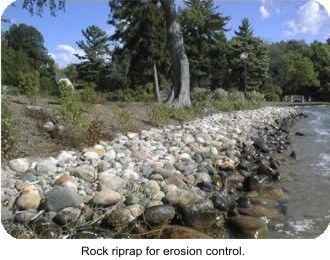
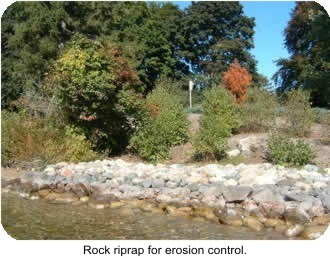
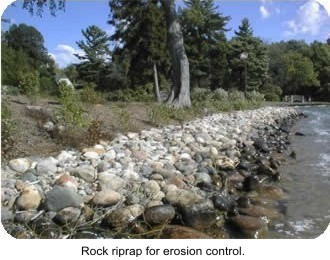
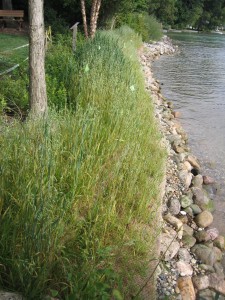
Rock riprap that slopes into the lake provides protection against erosion but alsoPhoto Rock riprap for erosion control allows for movement of reptiles and amphibians from water to land. Spaces between the rocks also provide cover for fish and crustaceans. It is necessary to line riprap with geotextile fabric to prevent soil particles from being dislodged by wave energy. Interplanting, or joint planting, with woody shrubs can create a softer look, disperse wave energy and create more wildlife habitat at the water’s edge.
Vegetative solutions to control shoreline erosion can vary from a simple buffer strip of long-rooted native plants and shrubs to soil bioengineered structures similar to those used in the KBS Shoreline Management Demonstration Area. There are new products and techniques to vegetatively control shoreline erosion being developed to meet customer demand for more natural solutions.

Reduced Lawn Maintenance

Lakescaping strives to reduce the intensity of management in sensitive shoreline areas. Lakescapes that require less mowing, watering, fertilizer, insecticides and herbicides can reduce impact. For example, a buffer strip of long-rooted native plants can serve to reduce lawn maintenance, enhance songbird and butterfly habitat, trap stormwater and stabilize eroding soils. However, property owners should be prepared to manage weeds until the buffer strip is well established.
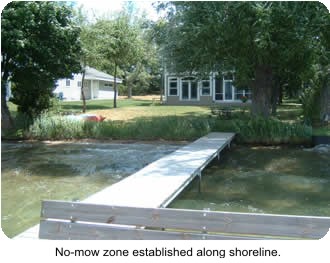
Photo shoreline with dock and no-mow zoneMany property owners establish a no-mow zone as a first step in lakescape planning. No-mow zones allow for experimentation with a taller “look” in a variety of depths, shapes and contours along the shoreline. They continue to mow their access areas (around beaches and docks) but strive to reduce these areas to less than 50 percent of their frontage. (The Michigan Department of Natural Resources recommends that 75 percent of a lake shoreline should remain undeveloped or restored to support a healthy fish population. MDNR Fisheries Division Special Report 38 – 1.42 MB pdf.)

Some property owners are surprised to see what springs from old shoreline seed beds when they stop mowing. If a shoreline still has it’s natural grade (not filled), wetland wildflowers like swamp milkweed may grow.

Reduced turf areas also mean less Canada Goose habitat. These unwelcome visitors deposit messy, fertilizer-laden droppings and prefer shorelines with unobstructed views and tender turfgrass. A lakescape that incorporates a 36-inch high by 20-foot deep dense buffer strip, or no-mow zone, can discourage geese – especially if the access area is narrow and turf area behind the buffer is reduced with islands of native plants or shrubs.
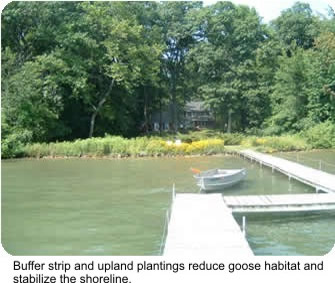
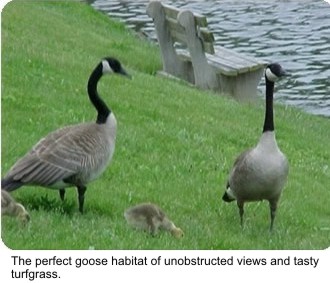
Photo Natural Shoreline buffer strip and upland plantings reduce goose habitat and stabilize the shorelinePhoto Goose habitat of unobstructed views and tasty turf grass
Next: Resources and Publications
 Posted by at 4:29 pm

Landscape Professionals


Many lakefront property owners will look to their landscape professionals for advice on shoreline restoration. Although every property is different and every client’s tastes are different, there are a few principles that guide lake-friendly shoreline restoration. Within these principles are varying degrees of “naturalization.” Through close communication and planning, the landscape professional will be able to assist his/her client in determining what works for the family, the property and the lake. Remember to review permit requirements before starting any shoreline project.

Stormwater Retention

Trapping and infiltrating stormwater has become a key component in protecting and improving lake water quality. Rainwater collecting on rooftops, walkways and parking lots tends to move over land to the lake, taking with it soil particles, lawn fertilizers and vehicle fluids. Development around lakes many times creates “pinch points” that collect and funnel stormwater into and through a property, causing soil erosion and washouts. Understanding vegetated solutions to a range of stormwater problems around lakes can equip landscape professionals to address these problems within the context of a lakescaping plan. KBS Landscape One demonstrates a simple solution to overland flow of stormwater. However, more technical solutions may be called for depending on the surface upon which stormwater is collected and the potential for pollutants.

Habitat Enhancement

Wildlife viewing is one reason people enjoy living on lakes. Through publications like “Lakescaping for Wildlife and Water Quality” lakefront property owners are realizing that restoring native shoreline vegetation can enhance that experience. The Michigan Native Plant Producers Association and the Wildflower Association of Michigan are resources for native plants and seed, education and for suppliers.

Photo Rock riprap for erosion controlPhoto 2 Rock riprap for erosion control

Shoreline Erosion Control

The proliferation of vertical sea walls around inland lakes is causing problems for lake ecosystems. They create an abrupt interruption of a natural transition from land to water. Wave energy is no longer absorbed by natural shoreline slope and vegetation, but is diverted downward and to neighboring properties. Many times shoreline erosion is made worse by a level control structure that places the lake surface at an unnaturally high level and in contact with soils less able to withstand the erosive forces of waves and ice. Many shoreline property owners are looking for erosion control alternatives to vertical seawall.

Rock riprap that slopes into the lake provides hard-armor but also allows for movement of reptiles and amphibians from water to land. Spaces between the rocks also provides cover for fish and crustaceans. It is necessary to line rip-rap with geotextile fabric to prevent soil particles from being dislodged by wave energy. Interplanting, or joint planting, with woody shrubs can create a softer look, disperse wave energy and create more wildlife habitat at the water’s edge.

Soft-armored, vegetative solutions to control shoreline erosion can vary from a simple buffer strip of long-rooted native plants and shrubs to soil bioengineered structures similar to those used in the KBS Shoreline Management Demonstration Area. To meet customer demands for more natural solutions, new products and techniques are continually being developed to vegetatively control shoreline erosion.

Please check back for more information.

Next: Infomation for Lawn Care Professionals

 Posted by at 4:29 pm

Native Plant Directory


Listed below are links to information about native shoreline plants. This is not a complete listing. For more information, please visit the Wildflower Association of Michigan or the Michigan Natural Shoreline Partnership‘s native plant list.

Common Name (Scientific Name):

Flowers

Blackeyed Susan (Rudbeckia hirta)

Chelone (turtlehead)

Culver’s root (Veronicastrum virginicum)

Golden zizia (Zizia aurea)

Great blue lobelia (Lobelia siphilitica)

Lanceleaf tickseed (Coreopsis lanceolata)

New England aster (Symphyotrichum novae-angliae)

Red columbine ( Aquilegia canadensis)

Rosinweed (Silphium)

Roundleaf ragwort (Packera obovata)

Sky blue aster (Symphyotrichum oolentangiense)

Spotted Joe Pye weed (Eupatoriadelphus maculatus var bruneri)

Swamp milkweed (Asclepias incarnata)

Wild bergamot (Monarda fistulosa)

Wild quinine (Parthenium auriculatum)

Grasses and sedges

Big bluestem (Andropogon gerardii)

Eastern bottlebrush grass (Elymus hystrix)

Fox sedge (Carex vulpinoidea)

Little bluestem (Schizachyrium scoparium)

Purple coneflower (Echinacea)

Sideoats grama (Bouteloua curtipendula)

Shrubs

Common elderberry (Sambucus nigra)

Gray dogwood (Cornus racemosa)

New Jersey tea (Ceanothus americanus)

Purpleosier (Streamco) willow (Salix purpurea)

Redosier dogwood (Cornus sericea)

Silky dogwood (Cornus amomum)


Next: Related Links

 Posted by at 4:29 pm

Permits

 
Does my shoreline project require a permit?

Visit the Michigan Natural Shoreline Partnership Permit Information page for updated information.

Most shoreline restoration projects will require one or more permits:

    • If you will be working below the Ordinary High Water Mark (OHWM) or below the Highest Legal Lake Level (HLLL) you will need a permit from the Michigan Department of Environmental Quality under Part 301 (Inland Lakes and Streams) of the Natural Resource and Environmental Protection Act (PA 451).
  • If you will be disturbing soils, removing existing vegetation or changing topography within 500 feet of a lake or stream you will need a Soil Erosion and Sedimentation Control Permit from the county soil erosion inspector under Part 91 (Soil Erosion and Sedimentation Control). There are exemptions for certain residential properties. Check with your county or municipal soil erosion office to see if you qualify.
  • Wetlands contiguous to inland lakes and streams are regulated by the state of Michigan under Part 303 (Wetlands Protection), and associated projects may require a permit. If you are unsure about the existence of a regulated wetland in your project area, check with the Michigan Department of Environmental Quality Wetland Identification Program.

Some projects will require more than one permit. Always check with the appropriate agencies/offices during the planning stages. Allow at least 90 days to get permits in place.

Shoreline Permit Terminology

Ordinary High Water Mark (OHWM) – The line on the shore established by the fluctuations of water and indicated by physical characteristics such as clear, natural line impressed on the bank, shelving, changes in the character of soil, destruction of terrestrial vegetation, the presence of litter and debris, or other appropriate means that consider the characteristics of the surrounding areas.

Highest Legal Lake Level (HLLL) – Legal lake levels are established under Part 307 of Act 451. On level-controlled lakes, locating the highest legal lake level is part of the planning process. Contact your county drain commissioner for information on legal lake levels.

Next: Native Plant Directory

 Posted by at 4:29 pm

Resources and Publications
 
Links to Resources
Shoreline Resources: Michigan Natural Shoreline Partnership
Michigan Natural Shoreline Partnership

MSU Turfgrass

Natural Solutions to Shoreline Problems on Inland Lakes
Website Content Authors

Kara Haas, KBS Science Education and Outreach Educator
karahaas@nullmsu.edu, 269-671-2360

Gina Frasson-Hudson, lead Volunteer

Jane Herbert, Senior Water Resource Educator (retired 2016)
Greening Michigan Institute
Michigan State University Extension
Kalamazoo County

Contact Information for website problems

shorelinewebmaster@nullkbs.msu.edu

Next: Tour Information

 Posted by at 4:29 pm